My Product Journey: A Labubu That Changed My Career Journey
5 min read
March 2025. I finished my master's degree at the University of Washington, Technology Innovation program. No return offer waiting. No job lined up. Just a degree, a laptop, and an idea I stumbled into by accident.
This is the story of how I got here — and why I think it might be the best thing that ever happened to me.
I fell in love with product design before I knew what it was
It started in 2022, my first UX/UI design class. Something clicked immediately — not a casual interest, more like a recognition. I loved that product design lived at the intersection of people, technology, and imagination. You could feel the logic of a good interface. You could see it change how someone moved through the world. I wanted to spend my life doing this.
I was lucky, in one sense: I came of age when product design was the one of the most-talked-about careers track in tech. Every company seemed to be hiring. People around me were landing roles, sharing offers, moving to San Francisco.
But timing is funny. By 2023, the year I graduated from my bachelor's program, the industry had hit one of its largest hiring freezes in years. The wave I'd been swimming toward had already broken. And I was standing at the shoreline wondering what to do next.
So I went to graduate school — not to delay real life, but to go deeper into it. I wanted to understand how PMs think, how engineers ship, how products go from a messy idea to something real and in people's hands.
The application abyss
My only shot at a real internship before graduation was the summer of 2024. I started applying in December 2023.
Over the next six months, I sent out 800+ applications. Intern roles, mostly. The responses were mostly silence. Ghost. Reject. "Position no longer available." Repeat.
I'm not going to pretend that was fine. It wasn't. That kind of sustained silence slowly eats at you. I started waking up every morning questioning whether I'd picked the wrong path. My mental state was rough. I doubted my skills, my judgment, my whole direction.
Then in May 2024 — after nearly six months — I got one offer from a big company. Leidos, in Baltimore, Maryland. Seattle to Baltimore is about as far across the country as you can go: six-hour flight, a city I'd never been to, a place where I knew nobody. I said yes without hesitating. Rented an apartment. Rented a car. Spent the whole summer there alone.
It was one of the most fulfilling and loneliest stretches of my life. I worked hard, learned a lot, and spent a lot of evenings in an unfamiliar city sitting with the uncertainty of what came next. But I showed up every day. Sometimes that's the whole job.
The second cycle — and the cruelest kind of rejection
Internship over. One week to breathe. Then: full-time job hunt. The anxiety I thought I'd left behind snapped right back.
This round had a new flavor of painful. I made it deep into the interview process at several companies I genuinely dreamed of working at — got far enough to feel the possibility of it — only to get the call that due to internal changes, they were no longer hiring new grad product designers. Not because of anything I did. Just circumstances.
That kind of rejection, where you get close enough to see inside before the door closes, is honestly harder than a silent inbox. I found myself seriously considering whether I should go back to my developer roots and change lanes entirely. Maybe product design wasn't for me after all. I was genuinely lost.
Then: Labubu, and an accidental startup
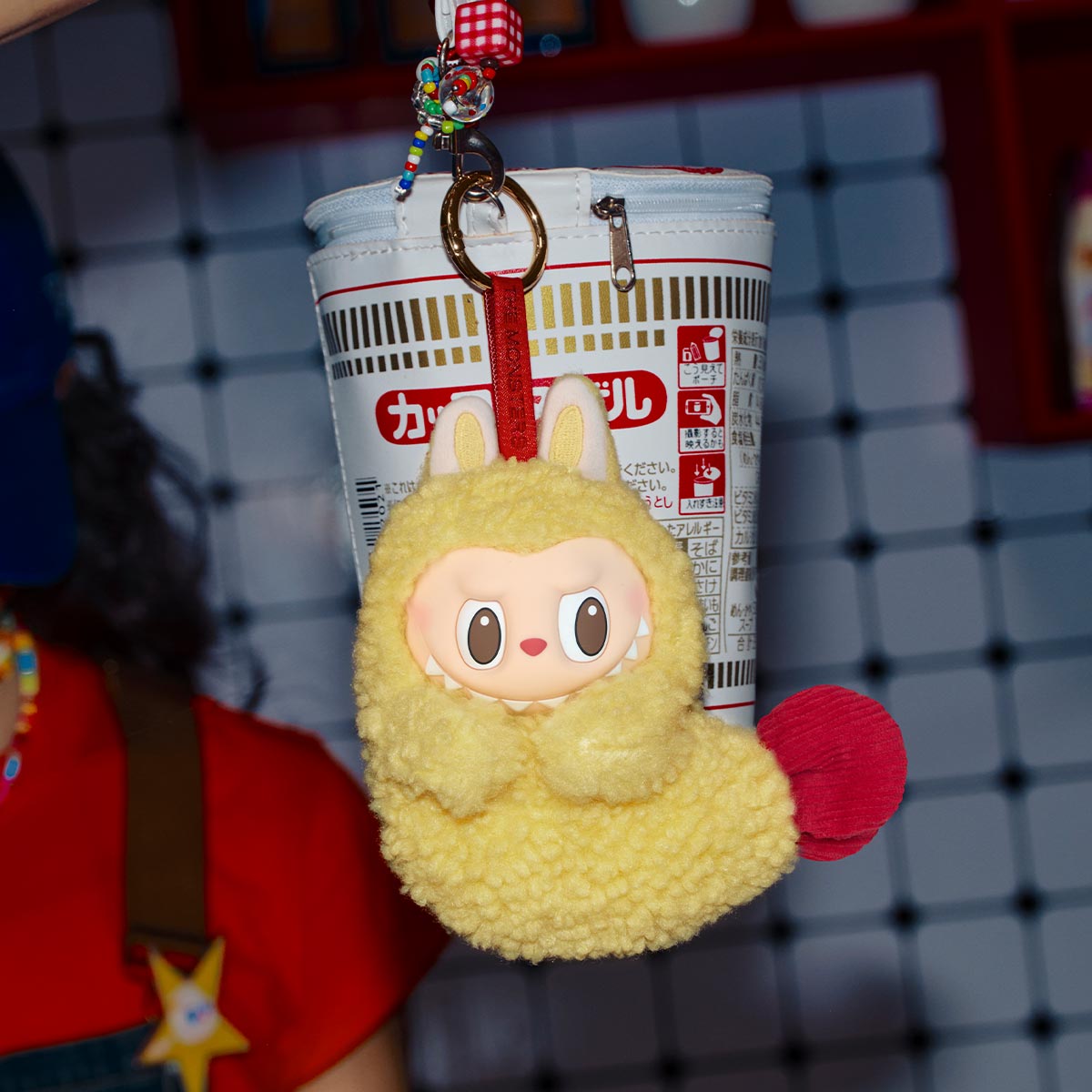
March 2025. Pop Mart's Labubu toys go completely viral in the US. If you know, you know — getting one required obsessive attention. Refreshing emails, watching live drops, setting reminders, staying glued to your phone. I'm a longtime collector, so I was deep in the chaos along with everyone else.
One afternoon, mid-refresh, a thought hit me: what if there was just a tool that told me when something restocked? I looked around. Nothing existed. So I texted two friends. We decided to try it — not as a startup, not as a company, just as a small project. Maybe just for ourselves.
Four weeks of 12+ hour days later, we had an MVP. Then we put it out into the world.
10,000+ registrations in the first week. The collector community started talking about us. We hadn't even planned a launch.
What I actually learned
Here's what hit me when that happened: for the past two years, I'd been designing to get a job. Polishing my portfolio for recruiters. Updating my resume before interviews. Practicing case studies. Every project I touched had this invisible weight on it — prove yourself, land the offer, justify the path.
And the moment I let go of all that — the moment I just built something because it was genuinely useful, because it was exciting, because my friends and I were texting each other at 2am about a feature — that's when something actually worked.
I'd forgotten my original reason for loving product design. It was never about getting hired. It was about connecting design, technology, and people. It was about making something that made life a little better or easier or more joyful. The work itself — that was the whole point.
When I stopped obsessing over the outcome and just built something I cared about, the outcome came on its own.
Why I became a co-founder instead of taking a job
I didn't plan any of this. There was no grand strategy. A few months ago before graduation, I was genuinely considering switching careers. Now I'm a product lead and co-founder building something real, for a community I'm actually part of, solving a problem I felt in my own life.
I'm not writing this as someone who figured it all out. I'm writing this from the middle of something uncertain and exciting and exhausting all at once. Graduation was supposed to bring clarity. Instead it opened up a whole new set of questions.
But I'm working on something I care about. And that feels completely different from anything I was chasing before.
If you're somewhere in the application abyss right now — the silence, the rejects, the "we've decided to go in a different direction" emails — I just want to say: keep building things that actually matter to you. Not things that look good on a portfolio. The gap between those two is where everything interesting happens.
And maybe go collect some Labubu while you wait.